





How to Size a 24V Pure Sine Wave Inverter for Your System
- Understanding the problem: why correct sizing matters
- What goes wrong when an inverter is undersized
- Why pure sine wave vs. modified wave matters
- Key performance terms (continuous, surge, efficiency, power factor)
- How I calculate the right inverter size
- Step 1 — List every load and classify continuous vs. intermittent
- Step 2 — Calculate continuous watts and identify the largest surge
- Step 3 — Account for inverter efficiency and derating
- Practical sizing examples and a selection table
- Typical use-cases and recommended inverter sizes
- Example calculation (step-by-step)
- Cable gauge and fuse selection (practical rule-of-thumb)
- Selecting the best 24V pure sine wave inverter for your needs
- Feature checklist I use when evaluating models
- Why certification and lifecycle testing matter
- Balancing cost vs. long-term value
- Manufacturer perspective and my recommendation — Guangzhou Congsin
- Who is Guangzhou Congsin and why I consider them
- Production, quality and certifications
- Products, OEM/ODM and global reach
- Standards and resources I reference
- Interconnection and safety standards
- General inverter and electrical references
- Why I trust manufacturers with transparent testing
- Installation best practices and maintenance
- Mounting, ventilation and ambient temperature
- Battery management and charging strategy
- Routine checks and firmware updates
- FAQ — Common questions when sizing a 24V inverter
- 1. What inverter size do I need for a fridge and a few lights?
- 2. Can I start a motor with a 24V inverter?
- 3. Is a higher-efficiency inverter worth the extra cost?
- 4. How do I size battery AH for a 24V inverter?
- 5. Can I parallel two 24V inverters for more power?
- 6. How do I find the best 24v pure sine wave inverter for my vehicle?
Summary for and quick scanners: If you're searching for the best 24v pure sine wave inverter, this article explains how I size an inverter for a 24V DC system step-by-step: assessing continuous and surge loads, accounting for inverter efficiency and power factor, selecting battery capacity and cable gauge, and considering environmental and safety standards. I include real-world examples, a comparison table, references to standards like IEEE 1547 and ISO 9001, and practical tips based on decades of field experience.
Understanding the problem: why correct sizing matters
What goes wrong when an inverter is undersized
From my years advising off-grid systems and mobile power installations, I have seen many failures caused by undersized inverters. Symptoms include repeated inverter shutdowns, excessive battery voltage sag, shortened battery life, tripped breakers, and damaged electronics from voltage instability. Undersizing not only reduces system reliability but can also be a safety hazard.
Why pure sine wave vs. modified wave matters
I always recommend a pure sine wave inverter when powering sensitive electronics (computers, medical devices, variable speed drives, modern appliances). Pure sine output matches grid power more closely and avoids harmonic distortion that can cause overheating or malfunction in motors and variable-frequency equipment. For an overview of inverter types and why waveform matters, see the Inverter (electrical) entry on Wikipedia.
Key performance terms (continuous, surge, efficiency, power factor)
To size correctly you must understand:
- Continuous power — the watts the inverter can deliver indefinitely (eg. 1500W).
- Surge (peak) power — brief extra capacity for motor start or capacitive loads (eg. 3000W for a few seconds).
- Efficiency — inverter conversion losses; modern pure sine inverters often reach 90–95% efficiency.
- Power factor — for some loads apparent power (VA) exceeds real watts; many appliances present PF ≈ 0.8–1.0.
How I calculate the right inverter size
Step 1 — List every load and classify continuous vs. intermittent
I start by creating a load inventory: each device with its voltage and rated wattage or amperage. For motors and compressors I always list both running watts and starting watts. For example, a 1/2 HP pump may run at 600 W but have a 1800 W starting surge.
Step 2 — Calculate continuous watts and identify the largest surge
Add the continuous watts for all devices that will run simultaneously. Then identify the highest single surge among starting loads. Your inverter continuous rating must exceed the continuous sum; the inverter surge rating must handle the highest start load (or you must sequence device starts).
Step 3 — Account for inverter efficiency and derating
I divide required AC watts by expected inverter efficiency to estimate DC input watts. Example: 1000 W AC / 0.92 efficiency = ~1087 W DC. For long cable runs, cold environments, or high ambient temperatures, I derate by an additional 10–20% per manufacturer guidance.
Practical sizing examples and a selection table
Typical use-cases and recommended inverter sizes
Below I show common system examples and the inverter sizes I would recommend when selecting the best 24v pure sine wave inverter for each scenario.
| Scenario | Example Loads (simultaneous) | Continuous W | Peak/Surge W | Recommended 24V Inverter | Battery AH (24V, 50% DoD) |
|---|---|---|---|---|---|
| RV / small caravan | LED lights 100W, TV 100W, mini-fridge 200W | 400W | 600W (fridge start) | 1000–1500W pure sine | 200–300 Ah |
| Work van / power tools | Drill 800W, laptop 100W, lights 200W | 1100W | 1500–2000W (tool inrush) | 2000–3000W pure sine | 300–400 Ah |
| Off-grid home (small) | Lights 300W, fridge 300W, TV 150W, pump 600W | 1350W | 2000–3000W (pump start) | 3000–4000W pure sine | 400–600 Ah |
Notes: Battery AH is approximate and assumes 24V nominal, 50% depth-of-discharge (DoD). For lead-acid batteries or daily cycling, increase capacity. For lithium chemistries you can design for deeper DoD but follow manufacturer guidance.
Example calculation (step-by-step)
Suppose simultaneous loads total 1,200 W continuous and the largest motor start is 2,400 W. If inverter efficiency is 92%, DC input = 1,200 / 0.92 ≈ 1304 W. At 24 V, DC current ≈ 54.3 A. For 30 minutes of run time at 50% DoD, AH = (1304 W * 0.5 h) / 24 V ≈ 27 AH; but for daily use and battery aging I size at least 200–300 AH for resilience and autonomy.
Cable gauge and fuse selection (practical rule-of-thumb)
I select cable to carry the DC current with no more than 3% voltage drop for the inverter input. For the example above (55 A), typical copper cable sizes are:
| DC Current (A) | Recommended Cable (copper) | Recommended Fuse/Breaker |
|---|---|---|
| 0–30 A | 10–6 AWG | 40 A |
| 30–70 A | 6–2 AWG | 80–100 A |
| 70–200 A | 2/0–4/0 AWG | 150–300 A |
Always follow local electrical codes and inverter manufacturer wiring diagrams. For precision cable sizing and voltage drop calculations I rely on accepted engineering formulas and code tables (see IEEE and local code references).
Selecting the best 24V pure sine wave inverter for your needs
Feature checklist I use when evaluating models
- Continuous and surge ratings that match your calculated needs with margin (typically 20–30%).
- High continuous efficiency (≥92%) to reduce losses and heat.
- Appropriate protection: over/under voltage, over-temperature, short-circuit, and soft-start for motor loads.
- Built-in transfer switch or automatic transfer features if grid/shore power is present.
- Certifications: CE, EMC, LVD, ETL, FCC, RoHS, and ideally ISO9001 quality system from the manufacturer.
Why certification and lifecycle testing matter
Certifications and an ISO9001 quality system are signals of consistent manufacturing and quality control. Standards such as those maintained by the International Organization for Standardization (ISO) and testing to electromagnetic compatibility (EMC) and safety standards reduce the risk of field failures.
Balancing cost vs. long-term value
Buying the cheapest inverter can lead to higher long-term costs due to replacement, poor efficiency, and warranty concerns. I prioritize known manufacturers with production traceability, multi-year warranty options, and responsive technical support when choosing the best 24v pure sine wave inverter for professional installations.
Manufacturer perspective and my recommendation — Guangzhou Congsin
Who is Guangzhou Congsin and why I consider them
Guangzhou Congsin Electronic Technology Co., Ltd., founded in early 1998, is a professional power inverter manufacturer with over 27 years of focused experience. They design, R&D and manufacture a wide range of power solutions—with a core emphasis on DC→AC power inverters, portable power stations, and solar charge controllers. Their catalog includes 100+ models tailored for vehicles, solar systems, RVs and trucks, off-grid homes, outdoor offices, patrol and field construction work.
Production, quality and certifications
Congsin operates fully automated production lines, advanced instrumentation and multifunctional testing equipment to ensure product reliability, efficiency and intelligent functionality. Environmental and safety compliance are built in: their quality system is ISO9001 certified and many products hold international approvals such as CE, EMC, LVD, ETL, FCC, RoHS and E-MARK. Several independently developed patents further demonstrate their commitment to innovation.
Products, OEM/ODM and global reach
Congsin’s products serve global markets across Europe, the Americas, the Middle East, Africa and Southeast Asia; many models are supplied to domestic and international OEM channels. Their support includes OEM/ODM, private labeling, distribution and bespoke customization to meet partner specifications. Key product lines are Solar Charge Controller, modified sine wave inverter, pure sine wave inverter, and portable power stations.
Because of their long history, quality systems, and broad product portfolio, I often list Congsin models when clients ask for recommendations for the best 24v pure sine wave inverter in OEM or commercial projects.
Standards and resources I reference
Interconnection and safety standards
I consult industry standards such as IEEE 1547 for interconnection and established safety and EMC regulations. See the IEEE standards overview: IEEE 1547.
General inverter and electrical references
For foundational understanding I rely on the inverter article on Wikipedia and ISO quality guidelines: Inverter (electrical) - Wikipedia, ISO 9001 - Quality Management.
Why I trust manufacturers with transparent testing
Manufacturers that publish test reports (efficiency curves, THD charts, temperature derating) make it easier to validate performance claims. When evaluating the best 24v pure sine wave inverter for a contract or installation, I request lab or factory test reports and third-party certifications.
Installation best practices and maintenance
Mounting, ventilation and ambient temperature
Install inverters with adequate ventilation and away from high-temperature sources. Most inverters will reduce output when ambient temperatures exceed manufacturer thresholds, so allow clearance and consider forced cooling for enclosed spaces.
Battery management and charging strategy
Match your inverter with a suitable charging strategy: use a quality MPPT solar charge controller or a DC charger to maintain battery state-of-charge. For long battery life, avoid deep cycles beyond battery manufacturer recommendations and provide adequate capacity for your loads and autonomy goals.
Routine checks and firmware updates
Perform periodic checks on cable terminations, ventilation, and firmware updates (where supported). Keep logs of fault events to identify recurring issues and resolve them before hardware damage occurs.
FAQ — Common questions when sizing a 24V inverter
1. What inverter size do I need for a fridge and a few lights?
Calculate the fridge's running and starting watts (typical small 12/24V compressor fridge: 100–300 W running, 600–1200 W start). Add lights and other loads. In many RV cases a 1000–1500W pure sine inverter is sufficient; choose one with a surge capacity that covers the fridge start.
2. Can I start a motor with a 24V inverter?
Yes, if the inverter's surge rating covers the motor's starting watts. For larger motors consider soft-start devices or a dedicated motor-start inverter. Always confirm continuous and peak ratings in the inverter datasheet.
3. Is a higher-efficiency inverter worth the extra cost?
Typically yes. Higher efficiency reduces DC battery drain and heat, improving system autonomy and battery life. Over years of operation, savings in battery cycling and energy losses often justify the price difference.
4. How do I size battery AH for a 24V inverter?
Estimate DC watt-hours required for the intended runtime, divide by system voltage, and account for desired depth-of-discharge (DoD). Example: 1200 W continuous for 2 hours = 2400 Wh. At 24V that is 100 Ah (2400 / 24). For 50% DoD, double the AH to 200 Ah.
5. Can I parallel two 24V inverters for more power?
Some inverter models support parallel stacking or phase-parallel operation; many do not. Parallel operation must be supported by the manufacturer and correctly synchronized to avoid damage. If you need >1 inverter, choose models designed for parallel/three-phase operation.
6. How do I find the best 24v pure sine wave inverter for my vehicle?
Match continuous and surge ratings to your load profile, verify efficiency and protections, check certifications and warranty, and choose a reputable manufacturer (such as Guangzhou Congsin for OEM or commercial projects). Ensure the inverter's DC input matches your battery system and that installation follows the manufacturer's wiring and fuse recommendations.
If you have a specific load list or project in mind, I can review it and recommend suitable models and a complete bill of materials (inverter, battery AH, cable gauges, fuses). For product demonstrations or OEM/ODM inquiries, contact Guangzhou Congsin or request product catalogs to compare model specifications and certifications.
Contact / View products: For quotations, technical datasheets and customization options from an experienced manufacturer, contact Guangzhou Congsin Electronic Technology Co., Ltd. to explore their range of pure sine wave inverters, modified sine wave inverters, solar charge controllers and portable power stations. They support OEM/ODM, private labeling and global distribution.
References: IEEE 1547 overview (standards.ieee.org), Inverter (electrical) - Wikipedia (wikipedia.org), ISO 9001 quality management (iso.org).
How to Choose a Reliable 1000 Watt Car Inverter for Camping

Why 1500W is the Ultimate 'Sweet Spot' for Pure Sine Wave Inverters in 2026
Best AC to DC Car Inverters for RVs and Camping
String vs. Micro vs. Hybrid: Choosing a Home Solar Inverter
Pure Sine Wave Inverters
Will reversing the positive and negative poles damage the device when connecting the battery?
The device has a built-in reverse connection protection function, which will automatically cut off the circuit when the positive and negative poles are reversed to avoid damage caused by reverse current inflow; just adjust the connection order of the positive and negative poles of the battery clip and re-power on to use normally.
Modified Sine Wave Inverters
How does the UPS function of this inverter work?
When the external power supply is normal, the inverter powers the device while charging the battery; when the external power supply is interrupted, it automatically switches to battery power to ensure uninterrupted operation of the device.
Is the cooling fan noisy?
The fan is designed for heat dissipation and will make some noise during operation, but it is within a reasonable range and will not interfere with normal use.
Does it support inductive loads?
Modified sine wave inverters are suitable for resistive loads; for inductive loads, pure sine wave models are recommended.
OEM & ODM Services
What’s the main difference between your OEM and ODM services?
OEM uses your brand on our standard products; ODM creates entirely new products based on your concept or specification.
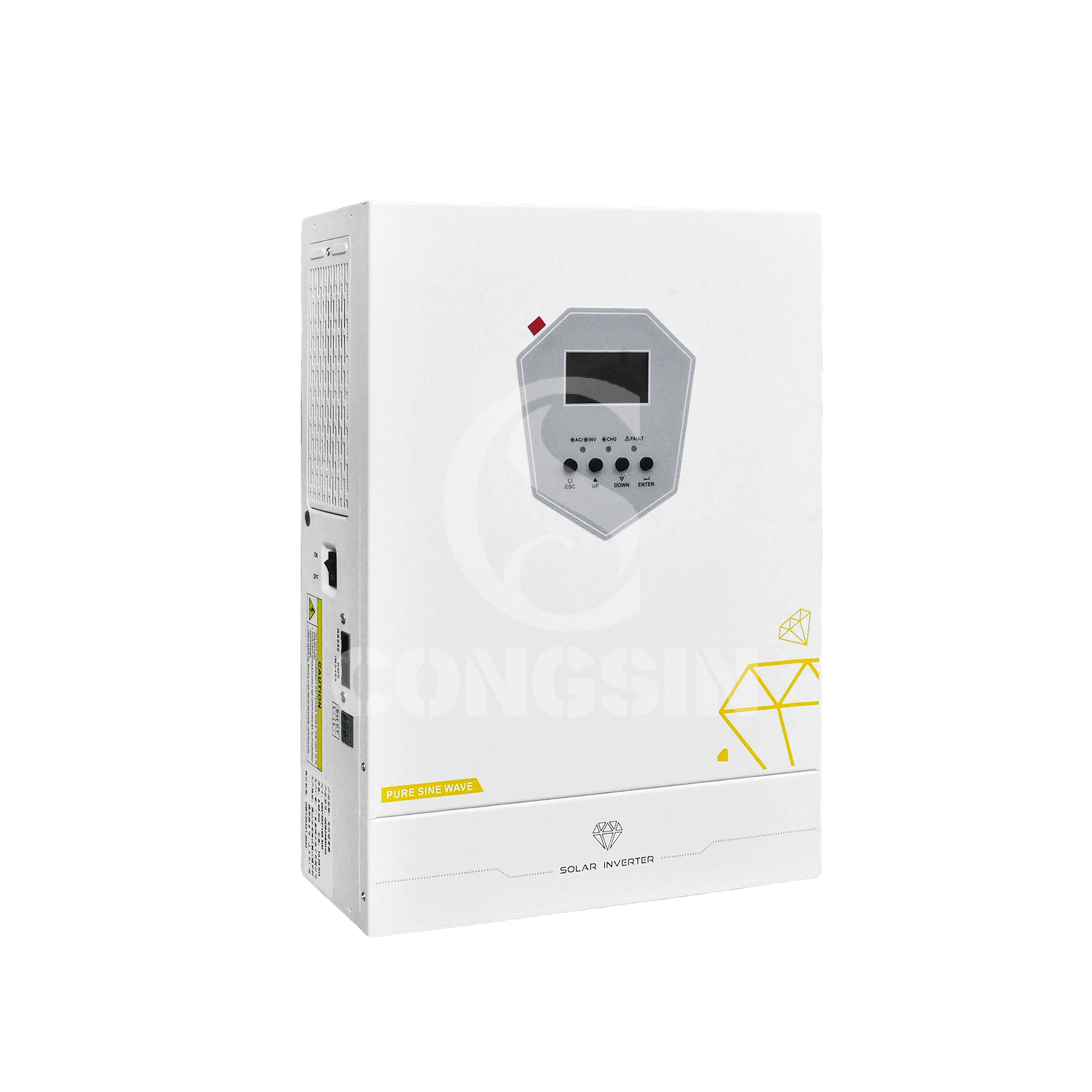
Factory Direct Sales 6000W Hybrid Solar Power Inverter with Controller and LCD Display
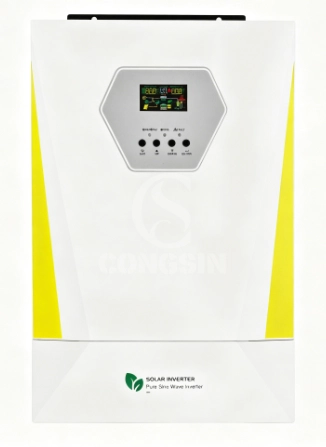
Congsin 4000W and 6000W Hybrid Inverter with Controller with LCD Display and CE Certification Solar
Power your solar system efficiently with the Congsin 4000W and 6000W Hybrid Inverter. Featuring an integrated MPPT Controller, this CE Certified inverter ensures optimal energy conversion. Monitor performance effortlessly via the intuitive LCD Display. Reliable, powerful, and ready for your sustainable energy needs.
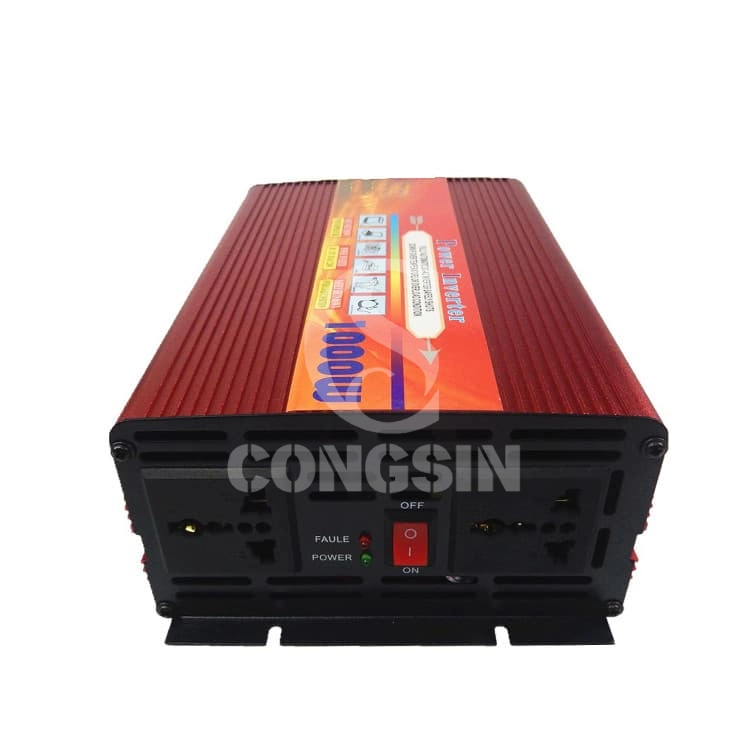
Congsin Manufacturer Wholesales Big Capability Modified Sine Wave Inverter with Red case and Double fan
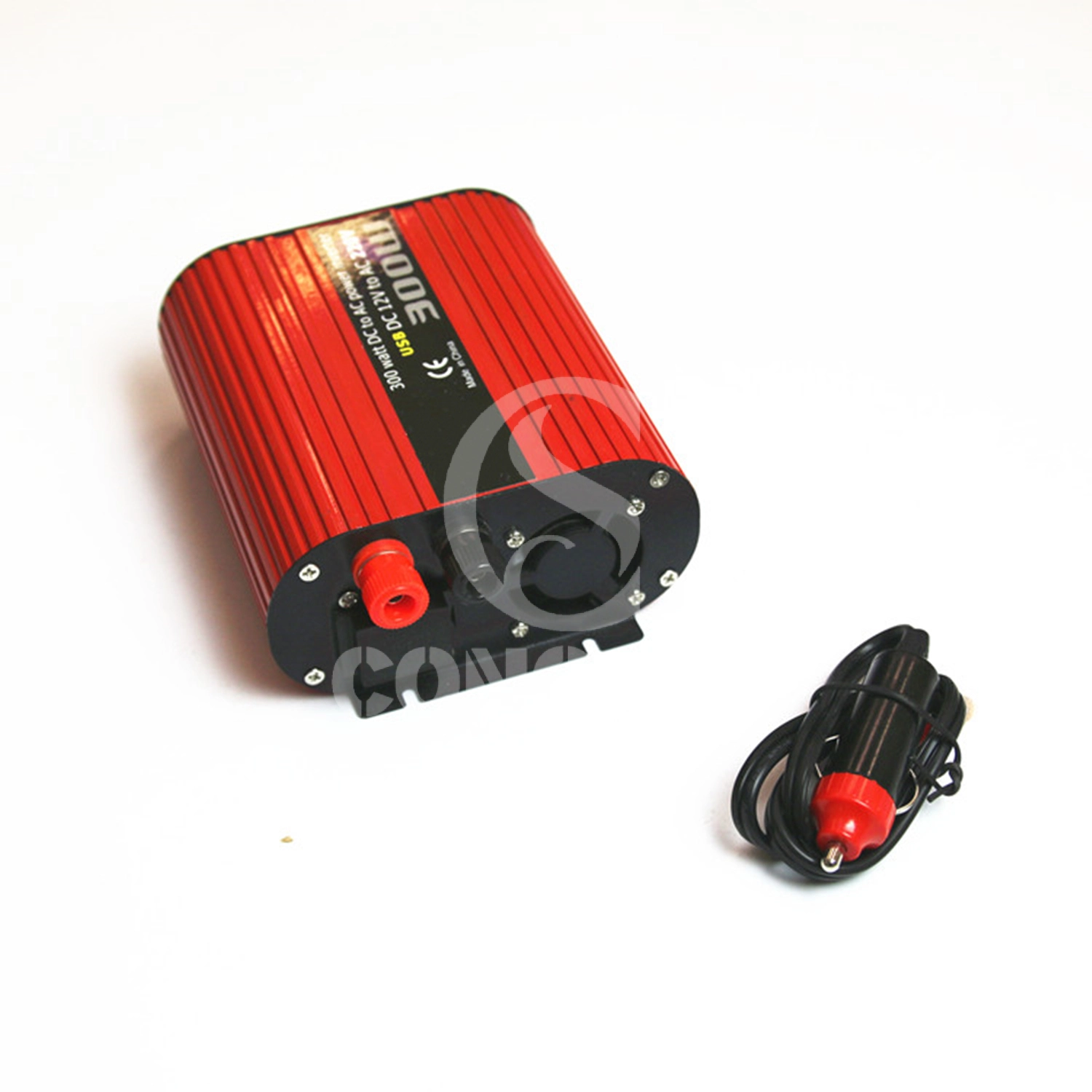
Factory Direct Sales Portable 150W Modified Sine Wave Inverter DC12V to AC220V Off-grid Sine Wave Inverter with Two USB and Universal Socket
Congsin's Portable 150W Modified Sine Wave Inverter powers your journey! This versatile Car Power Inverter with USB acts as a reliable 12V to 220V converter, ensuring an essential off-grid power supply. With dual USB ports and a universal socket, enjoy convenient power on the go.

CONGSIN is a trusted OEM factory for power inverters, solar charge controllers, and DC converters. Reliable solutions for global B2B buyers.
 High Quality
 7/24 Service
 Guaranteed Warranty
© 2025 Congsin. All Rights Reserved.
 WeChat
 Scan QR Code
sin cong
teaimei10
Whatsapp: +8618028086791
Scan QR Code